Scientific confidence: High
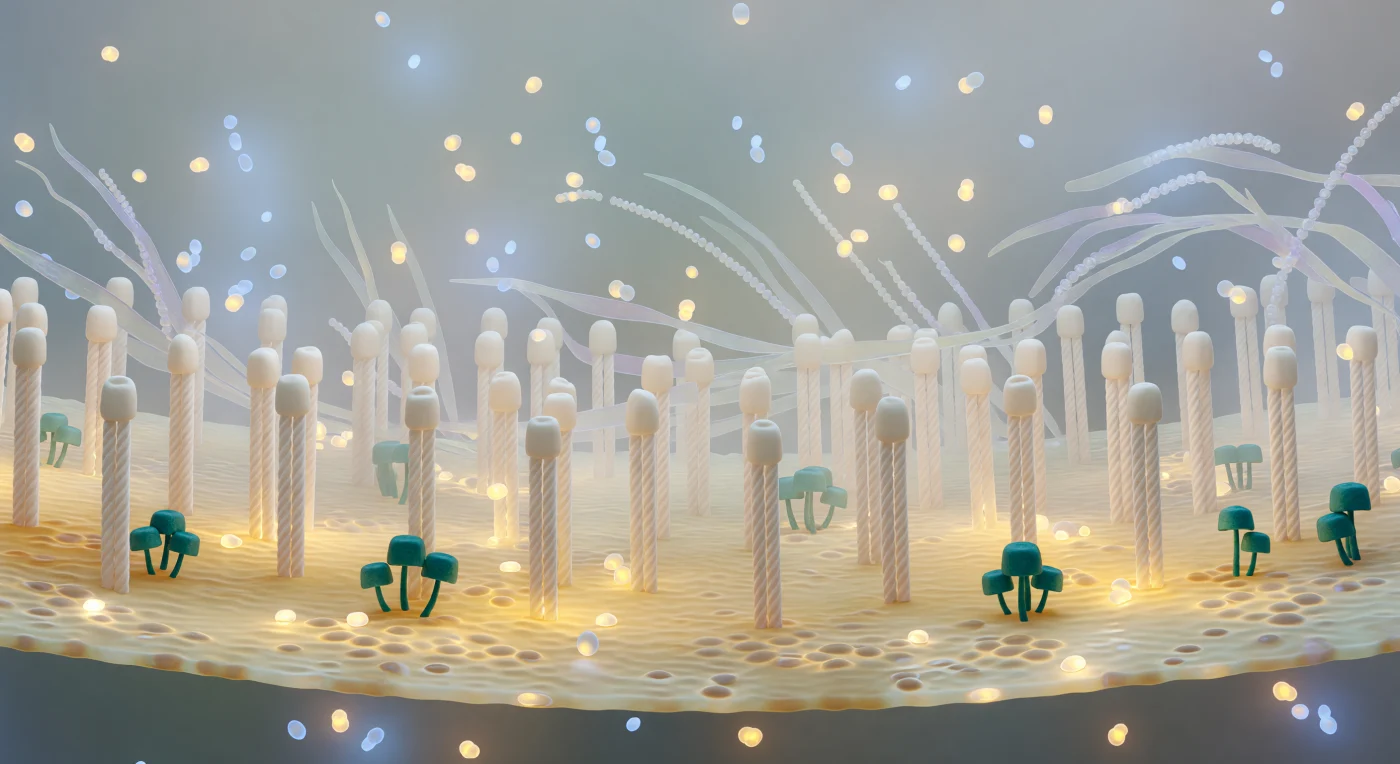
You find yourself drifting at eye level across a world that curves away in every direction, its surface a shimmering plain of warm amber and honey-gold — the fluid lipid bilayer of an influenza virion, alive with the slow thermal undulation of a membrane whose phospholipids and cholesterol-rich microdomains shift and pool in constant Brownian restlessness. Around you, hemagglutinin trimers rise like a dense ivory forest, each a slender three-stranded glycoprotein rod roughly thirteen nanometers tall, their softly swollen crowns packed close enough that the bilayer floor is only glimpsed in narrow amber corridors between them; scattered among them at irregular intervals, neuraminidase tetramers squat wider and lower, their blunt teal-and-verdigris heads catching the cold diffuse light differently and drawing the eye like dark lanterns in a pale wood. The surrounding medium is no vacuum but a luminous biological fog — serum albumin globules drift past like softly glowing amber spheres, sinuous glycoprotein chains and mucin strands trail through the middle distance like translucent kelp in slow current, and the visibility closes in rapidly, dissolving the further rows of pillars into opalescent haze just a handful of molecular lengths away. This is the extracellular milieu at physiological crowding: water behaves here as thick syrup, inertia is meaningless, and every surface encounter carries the potential for a binding event that could determine the fate of an entire infection. The scene holds no sky, no distant horizon, no open space — only this claustrophobically rich, densely inhabited forest of molecular architecture receding into luminous protein fog.
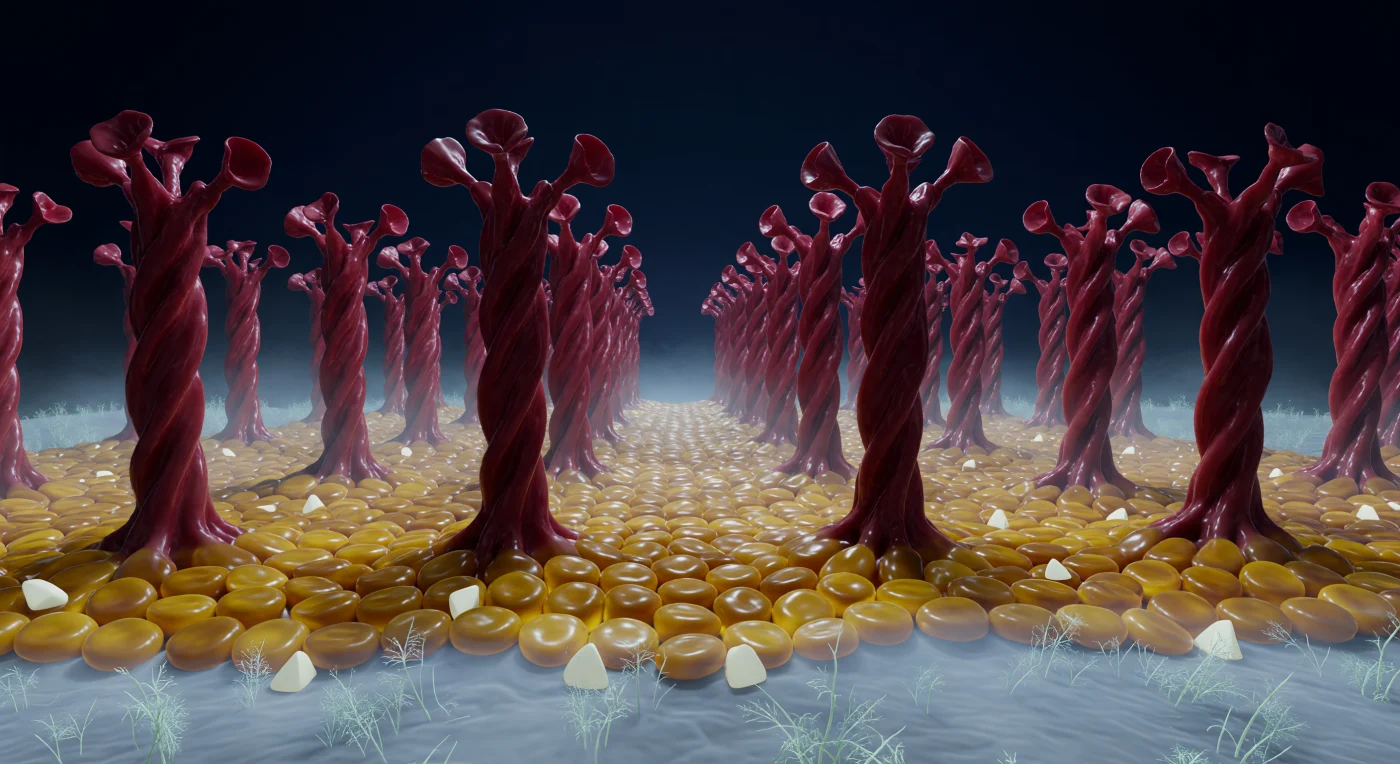
You are standing on the outer skin of one of the most consequential structures in modern biological history, and the ground beneath you is alive with motion. The surface rolls in slow thermal undulations — a fluid mosaic of tightly packed phospholipid head-groups glinting like amber river stones under diffuse bioluminescent light, stiffened in patches by pale cholesterol wedges, and crowned everywhere with a ghostly blue-white electrostatic haze rising from clustered phosphate charges. From this undulating plain, spike protein trimers erupt in every direction: massive oxblood columns twenty nanometers tall, each a triple-wound helix of extraordinary mechanical complexity, their transmembrane roots visibly distorting the lipid terrain, their upper receptor-binding domains splayed open like turbine blades reaching into void — the open conformation of a protein primed for cellular contact. The gaps between trimers feel like avenues through a forest of dark-red monoliths, the columns receding toward a curved horizon that betrays the spherical geometry of the entire virion, while far below, the host cell membrane stretches as a vast grey-blue glycan-frosted plain across the lower field of view. Nothing here is still: at this scale, thermal noise is a constant violent fact, every surface a potential binding event, and the entire architecture exists in a state of molecular urgency that the eye reads as beauty but the biology knows as predatory readiness.
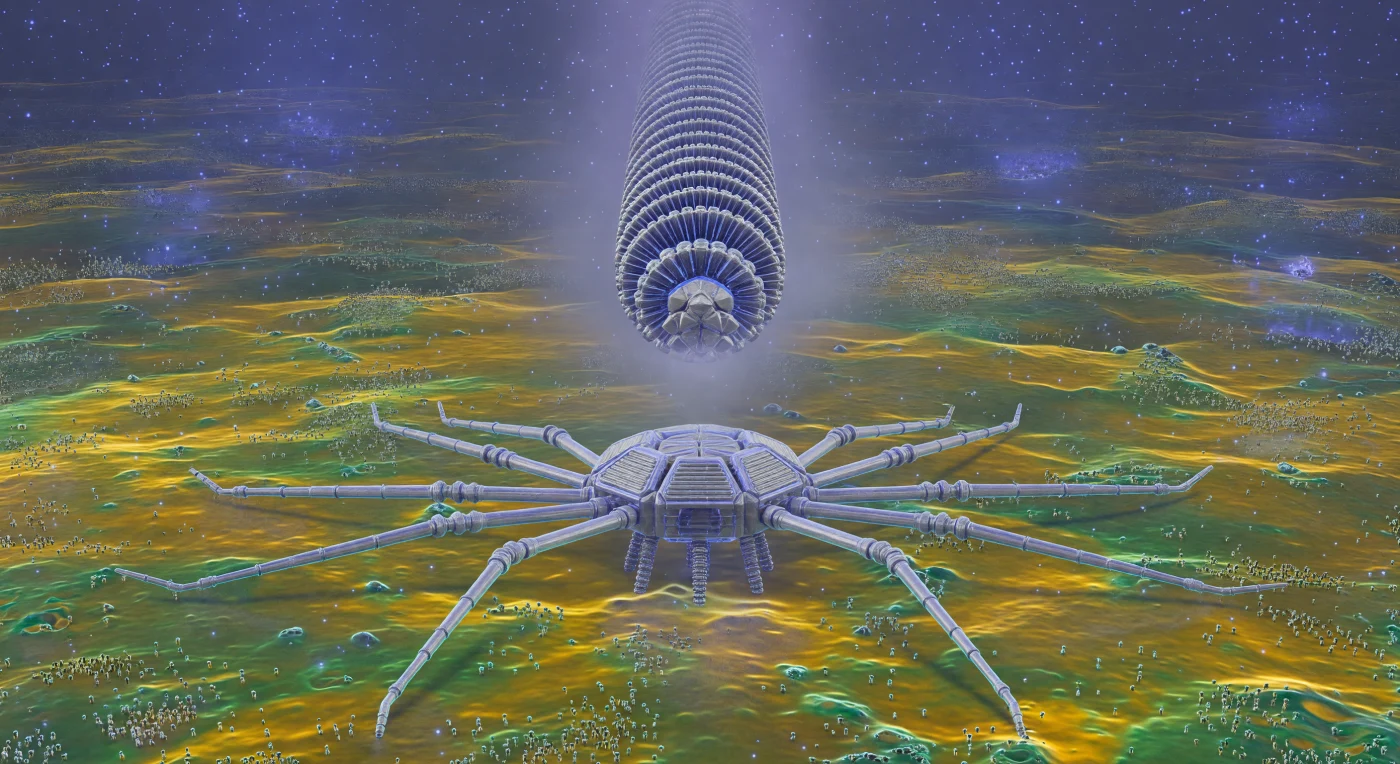
You are flat against the bacterial outer membrane, pressed into a landscape of swaying sugar chains and porin proteins that rise around you like storm-weathered rock formations, the whole plain trembling with the ceaseless percussion of thermal noise. Above you, filling the sky, the hexagonal baseplate of bacteriophage T4 descends with the slow, inevitable geometry of a machine built by evolution over billions of years — sixty nanometers of cold protein architecture, its faceted silver-gray faces housing tightly packed beta-sheet structures that scatter the ambient electron-density glow into faint blue-violet light, six short tail spikes already pressing toward the membrane below. Six long tail fibers splay outward in a radial star, each one jointed at its midpoint like a folding crane arm, their distal tips dimpling the lipopolysaccharide surface hundreds of nanometers away as specialized tip proteins lock with exquisite chemical precision onto specific receptor sugars — an irreversible molecular handshake that has been performed trillions of times across evolutionary history. Rising above the baseplate, the contractile tail sheath vanishes into violet haze, a striated helical column of stacked protein rings machined to tolerances measured in fractions of a nanometer, coiled and loaded like a compressed spring that will soon drive the inner tube through this very membrane in a millisecond injection event you will not survive to observe.
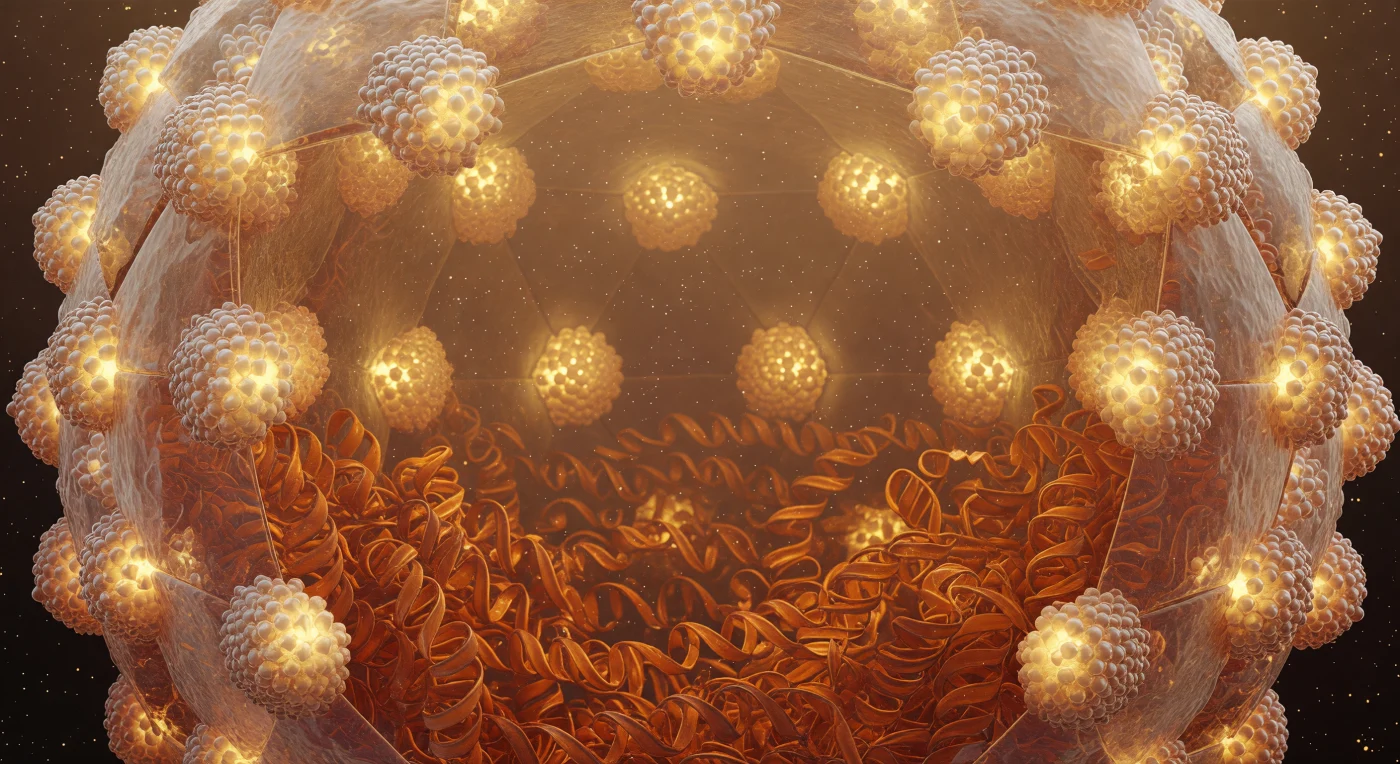
You stand at the geometric center of a self-assembled protein cathedral, entirely enclosed by a 36-nanometer icosahedral shell built from 240 copies of a single hepatitis B core protein folded into interlocking hexameric and pentameric capsomers — a T=7 triangulation number meaning the assembly logic required precisely seven quasi-equivalent protein environments to close the sphere without defect. The inner wall above and around you is not smooth but deeply textured: each capsomer rises 4 to 5 nanometers from the curved surface as a dense cluster of beta-barrel folds, their polypeptide backbones packed so tightly that the boundary between one protein and the next is a question of hydrogen bonds and van der Waals contacts rather than any visible gap, the twelve pentameric vertices where five-fold symmetry closes the geodesic logic glowing slightly brighter in the warm amber phosphorescence as though structural tension made visible. Beneath you, the packaged pregenomic RNA — a 3.5-kilobase transcript destined for reverse transcription into the viral DNA genome — fills the interior in dense, compressed coils of burnt orange, the helical strands pressing against one another and against the inner capsid wall with electrostatic and steric forces that keep the entire mass under measurable internal pressure, while the thermal agitation of the surrounding aqueous medium at 37 degrees Celsius drives constant micro-oscillations through both genome and protein shell simultaneously. The space between coiled RNA and protein wall is not vacuum but dense aqueous solution — magnesium ions, polyamines, and a continuous flux of water molecules, each water molecule striking the capsid interior roughly ten billion times per second, the cumulative effect of that thermal bombardment rendering the entire structure not rigid but dynamically trembling, a thermodynamic equilibrium held in place not by rigidity but by the statistical average of ten thousand molecular forces canceling one another out at every instant.
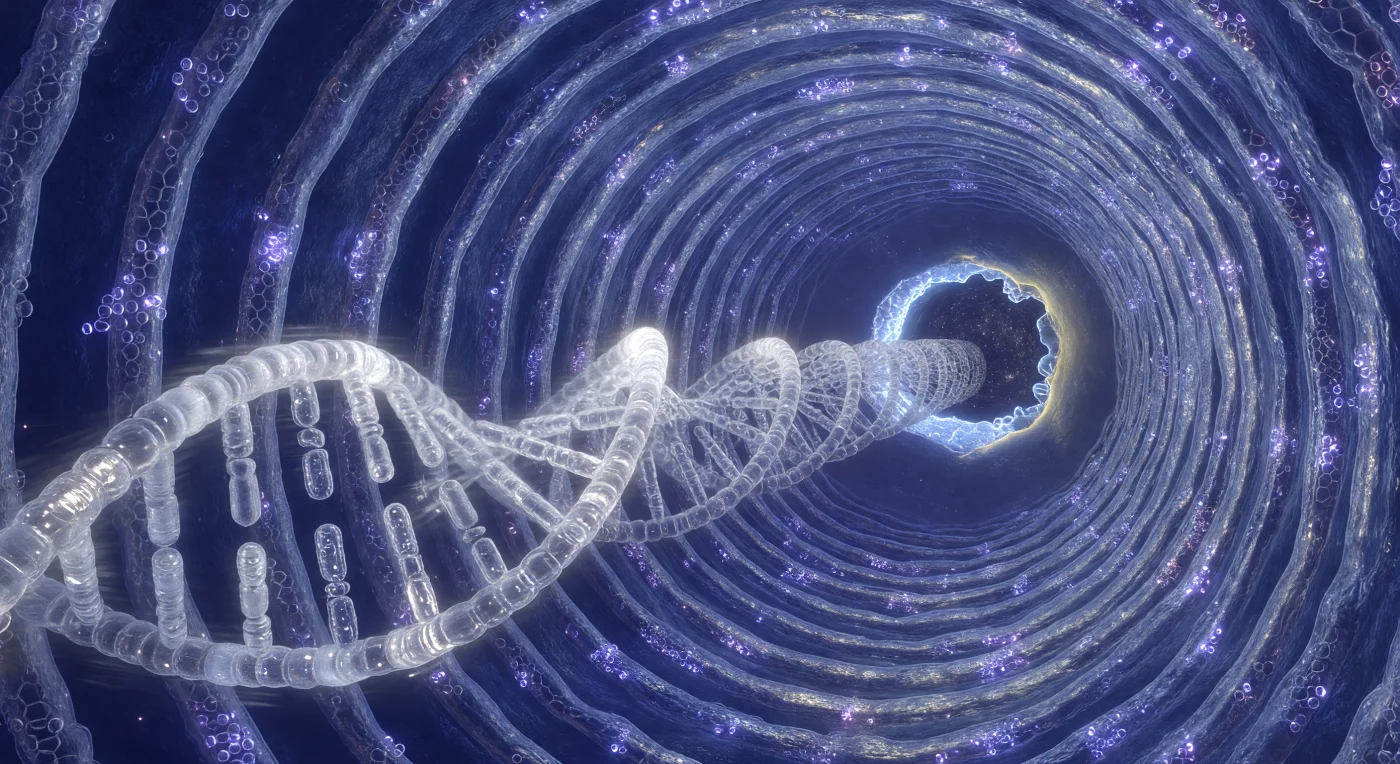
You are standing inside a tunnel no wider than two water molecules laid end to end, the curved walls of stacked protein rings pressing in from every side with their ridged, barrel-vault geometry, each crest of charged amino acid residues glowing in cold violet where arginine and lysine cluster like bioluminescent moss on cave stone. This is the tail channel of bacteriophage lambda, a molecular machine that has spent millions of years evolving a single brutal purpose: the forced delivery of its genome across the armored boundary of a living cell. Through you, at this very instant, a double-stranded DNA helix is erupting at catastrophic speed, driven by roughly six atmospheres of pressure stored in the phage head above — a silver-white rope of molecular glass whose phosphate backbone catches the ambient charge-glow in a continuous flickering sheen, its passage squeezing the electrostatically saturated fluid between strand and wall to near-molecular thinness, shimmering like heat haze above asphalt. Ahead, the exit pore blooms open as a ragged aperture of electric blue-white light where the channel has breached the bacterial inner membrane, lipid molecules displaced outward like a torn diaphragm, their hydrophobic tails briefly exposed as a pale golden fringe around the wound — and beyond that threshold, the bacterium's cytoplasm begins, an unresolvable darkness seething with thermal chaos, waiting to receive a genome that will rewrite the fate of everything it enters.
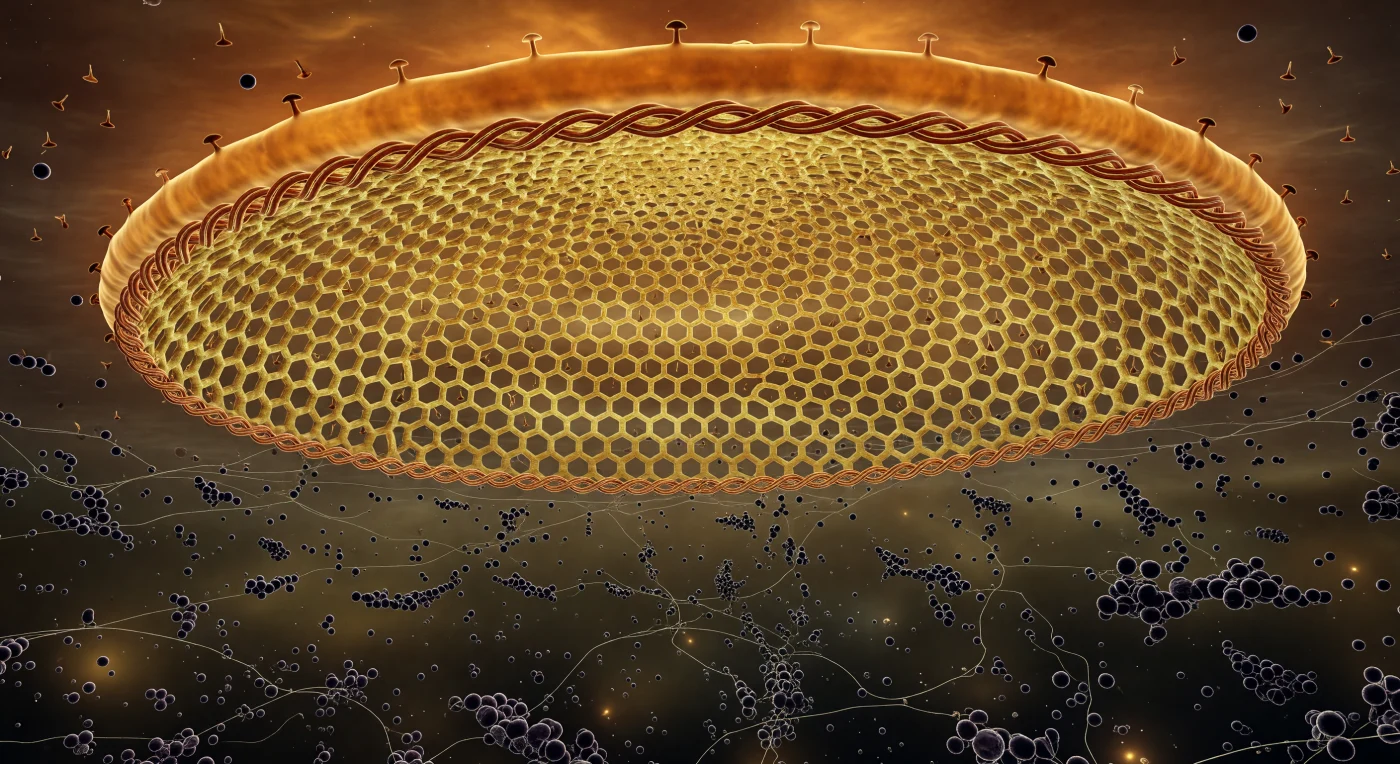
Looking up from inside the forming bud, the curved Gag lattice arches overhead as a vast amber honeycomb, its hexameric rings tessellating across the full span of your visual field in warm ochre and gold, each unit a self-assembled cluster of polyprotein subunits spontaneously adopting this geometry through nothing more than thermodynamic preference and molecular complementarity. This is HIV in the act of becoming — the immature Gag lattice, roughly 8 nanometers per hexameric ring, drives membrane curvature outward into a nascent virion that does not yet exist as an independent particle, the host plasma membrane glowing just beyond as a paired amber sheet, its lipid bilayer barely resolved, interrupted by the dark silhouettes of Env glycoprotein spikes already embedded and waiting. At the constricting neck visible at the dome's far rim, ESCRT-III filaments have been recruited from the host cell's own membrane-remodeling machinery and now spiral inward in a tightening copper coil, each polymer strand a few nanometers wide, their helical contraction preparing to sever the membrane neck in a topology-reversing scission event the cell ordinarily uses to pinch off multivesicular body cargo. Below, the cytoplasm recedes into an impenetrable crowded darkness of ribosomes, RNA strands, and jostling proteins — the thermal violence of that molecular environment invisibly transmitted upward into every element of the dome above, each subunit trembling in place, the entire architecture held together not by rigidity but by the collective statistics of ten thousand weak bonds.
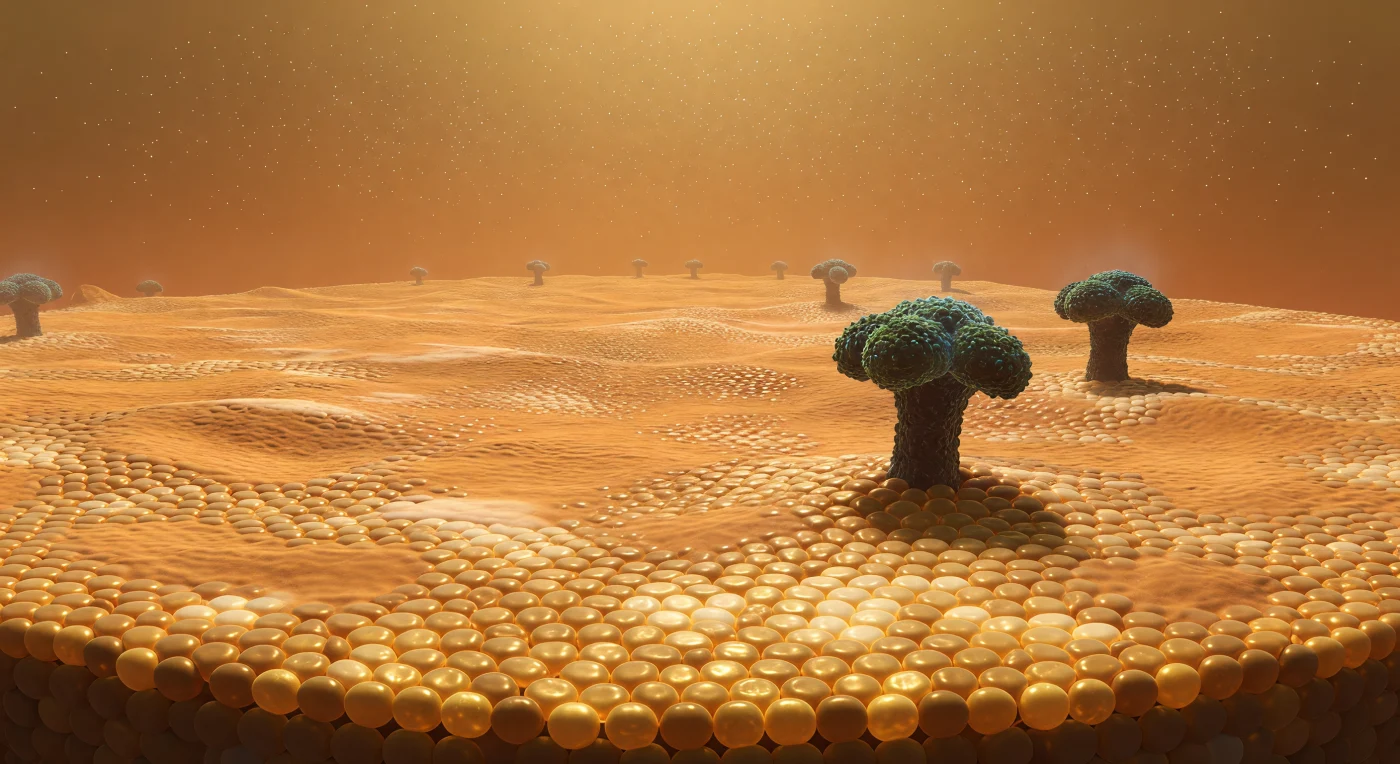
You stand on the outer face of an HIV-1 virion as though marooned on a warm desert planet, the lipid bilayer stretching away in every direction as a softly undulating plain of ochre and amber, each phospholipid headgroup visible underfoot as a faintly luminous cobblestone shifting in slow fluid hexagonal arrangements — this membrane is cholesterol-enriched and unusually rigid by retroviral standards, assembled partly from lipid rafts pirated from the host cell's own plasma membrane during budding. Perhaps forty body-lengths ahead, one of the virus's twelve gp120/gp41 trimeric envelope spikes rises like a solitary basalt monolith, its three lobes crowned with a translucent corona of N-linked glycans — roughly half the spike's molecular weight is sugar, a dense glycan shield evolved to frustrate antibody recognition and render the underlying conserved protein surface nearly invisible to the immune system. The electrostatic Debye layer shimmers around the spike's base where concentrated negative charge warps the local ionic atmosphere, while the membrane beneath you trembles with unceasing Brownian micro-shocks, thermal energy at physiological temperature delivering kicks of roughly 4 pN·nm with every water-molecule collision. Twelve spikes across an entire virion is extraordinarily sparse compared to other enveloped viruses — influenza bristles with hundreds of hemagglutinin trimers — and this poverty of surface features is itself a viral strategy, minimizing the antigenic targets exposed to neutralizing antibodies while each rare spike retains exquisite, conformationally gated affinity for the CD4 receptor on T-helper cells.
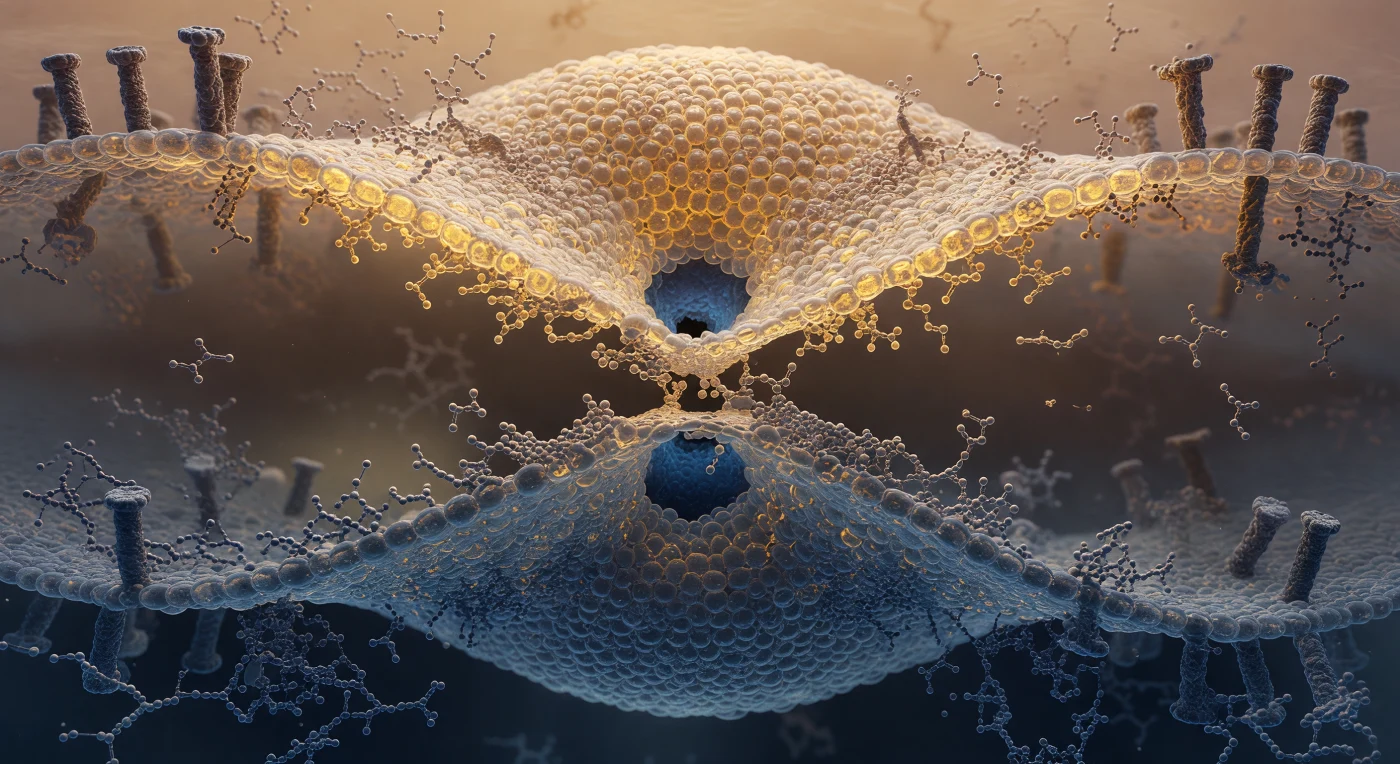
You are suspended at the narrowest point of a molecular hourglass, two nanometers across, where the boundary between a virus and the cell it is invading has temporarily ceased to exist. What surrounds you is not quite membrane and not quite open space but a continuous monolayer of interdigitated lipid — the stalk intermediate of hemifusion, a fleeting topological chimera in which the outer leaflets of a viral envelope above and an endosomal bilayer below have merged into a single disordered throat, their hydrophobic tails briefly exposed at the waist before folding back into the flanking leaflets whose headgroups, individually visible as boulder-sized phosphorylcholine spheres, tremble with violent thermal micro-displacements rather than any smooth or predictable motion. The geometry is stabilized, tenuously, by fusion proteins whose transmembrane anchors are sunk into both bilayers at the stalk periphery, their coiled-coil ectodomains having already snapped into their post-fusion conformation and dragged the two membranes together with forces measured in tens of piconewtons, bending both lipid planes radically inward to feed this junction. At the center of your view, physiological water presses inward from above and below against the last few angstroms of lipid barrier, forming two dark aqueous hemispheres that lean toward each other through the thinning fabric — the pore has not opened yet, but it is becoming inevitable, a thermodynamic commitment unfolding in slow molecular increments that will, within milliseconds, allow viral RNA to cross from one compartment into another and begin the infection of a cell.
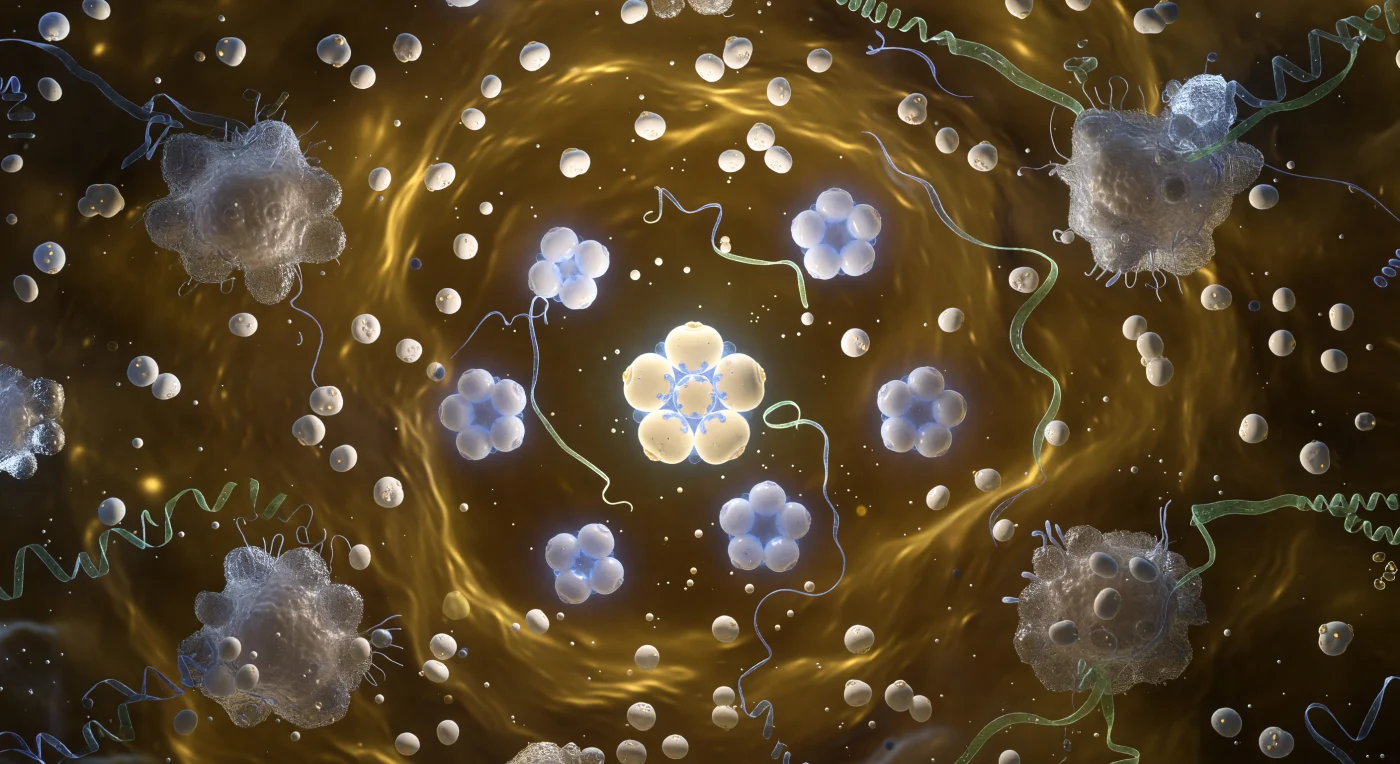
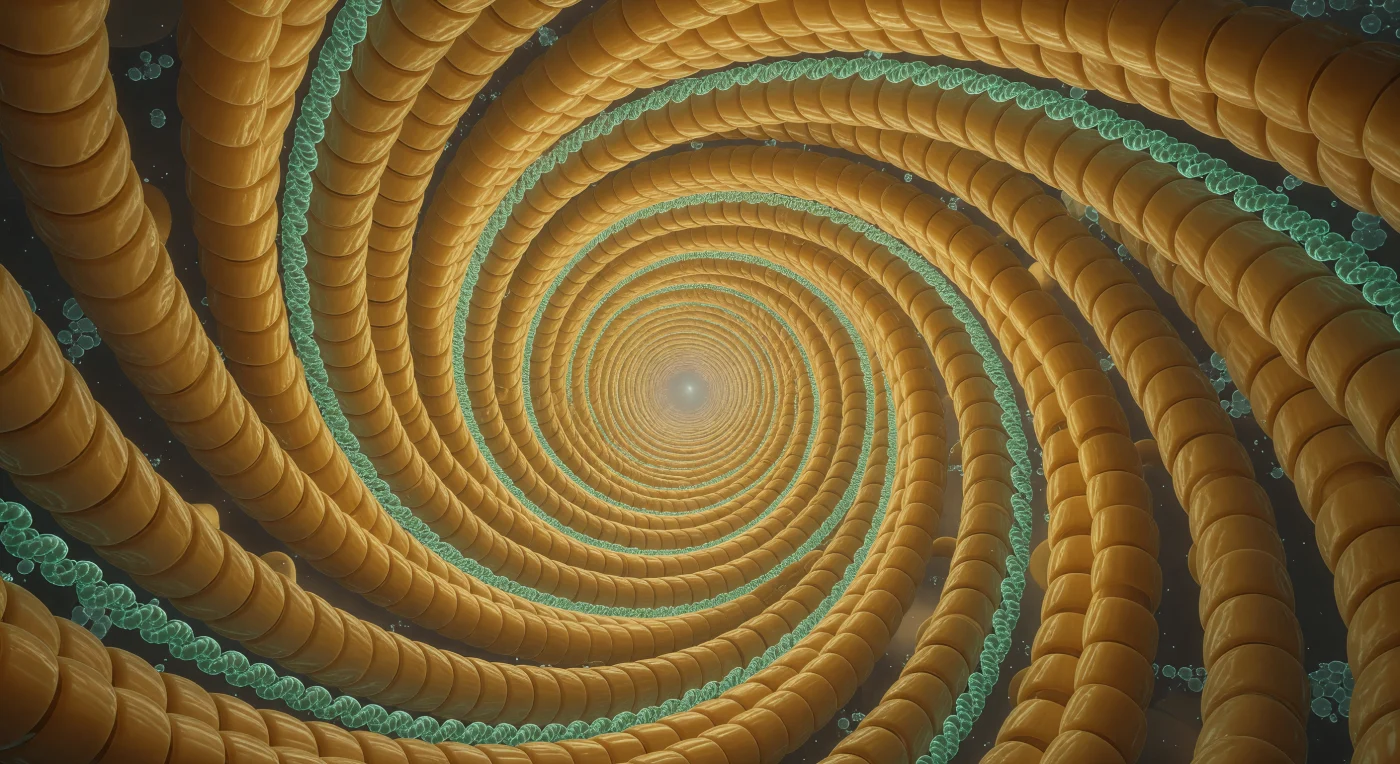
You stand inside a molecular machine older than any nervous system, suspended at the geometric center of a Tobacco Mosaic Virus rod whose walls rise around you in a seamless right-handed helix: 2,130 coat protein subunits, each a compact beta-sheet sandwich of warm ochre and amber, tessellate the tunnel surface with the regularity of a carved bobbin, their ridges and grooves repeating every 2.3 nanometers to produce a corrugated spiral that winds upward and downward into shadow with the precision of machined porcelain. Pressed snug against the inner face of the capsid wall, four nanometers from the axis where you float, the single-stranded RNA genome traces a continuous jade-green thread along a shallow spiral groove, each nucleotide held in electrostatic embrace by arginine residues on the protein surface — a genome not loose but cradled, locked in intimate molecular contact with the shell that both protects and controls it. Looking down the axis, the tunnel extends for what feels like the full length of a cathedral nave before narrowing to a pale circular aperture 300 nanometers distant, its far rim hazed by the thermal fog of water molecules and ions crowding the four-nanometer bore. The protein walls themselves are not still: each subunit breathes with picoscale thermal vibration, the collective motion producing a faint shimmer across the ribbed surface, a reminder that this structure exists not in frozen stillness but at the trembling edge of biological stability, held together by the same thermodynamic logic that allowed it to self-assemble spontaneously from its molecular components in the first place.
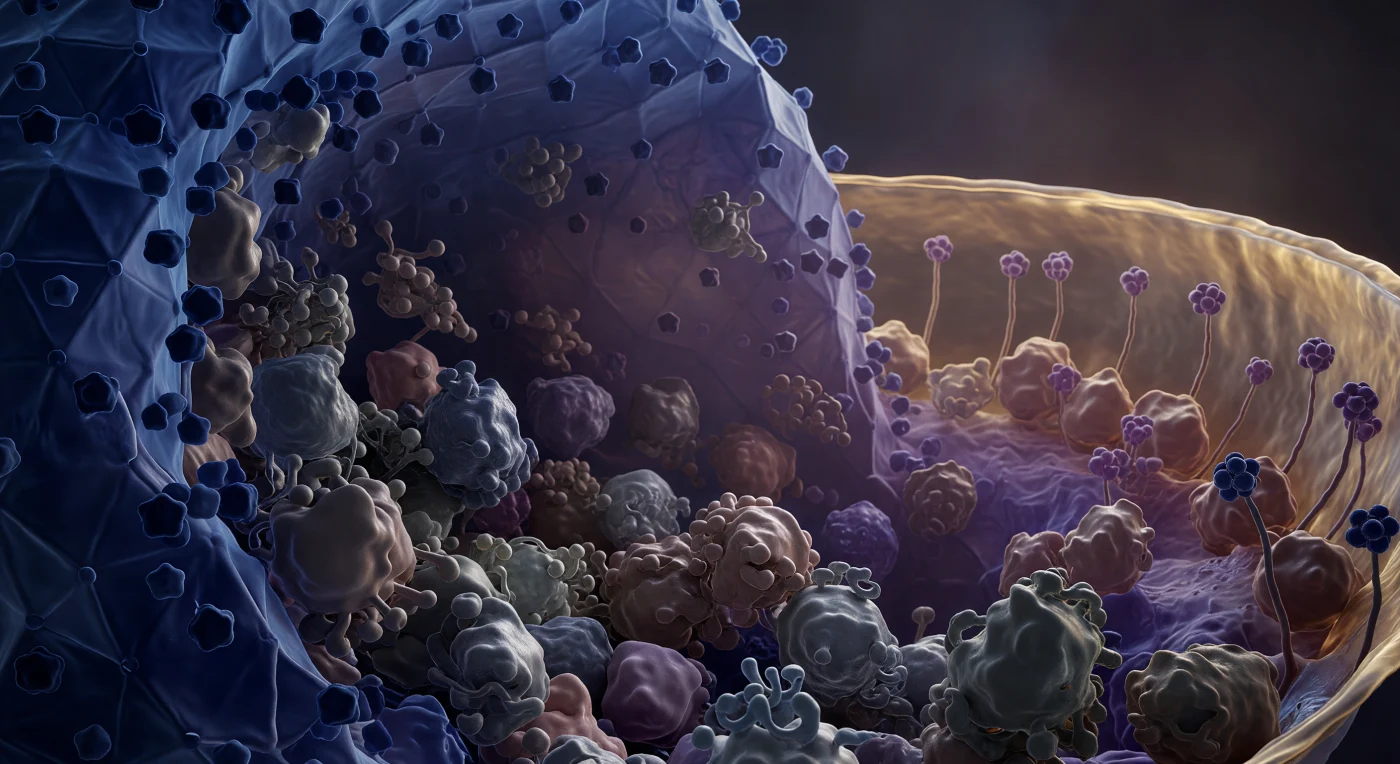
You are suspended inside the tegument layer of a herpesvirus virion, a compressed molecular corridor no wider than forty nanometres, pressed between two opposing architectures of extraordinary scale and character. To your left, the icosahedral capsid wall rises as a faceted cliff of deep cobalt geometry, its pentamer vertices jutting forward as darkened knobs and its triangulated faces curving upward and out of sight like an alien geodesic terrain emitting a cold blue-grey luminescence; to your right, the lipid envelope billows as a molten amber horizon, its two leaflets resolved into a trembling double band of honey gold, glycoprotein stems anchored into its inner face swaying in imperceptible thermal current. Between them, you are fully embedded in the tegument matrix — a near-suffocating density of VP16 and UL36 molecules pressed shoulder to shoulder in muted grey-violet and dusty mauve, their lobed irregular surfaces slick with bound water, edges blurring where hydrophobic contacts merge one protein mass into the next with no open channel anywhere. The tegument is not an inert packing material but a functional command layer, carrying transcriptional activators, capsid-tethering scaffolds, and host-evasion factors that are delivered directly into the newly infected cell upon membrane fusion, hijacking cellular machinery before a single viral gene has been transcribed. Every surface around you trembles in the faint constant jostle of thermal energy, the entire interior held in a frozen instant of molecular pressure — a geological silence, cool from the capsid face, warm from the membranous far wall, and absolutely, impossibly full.
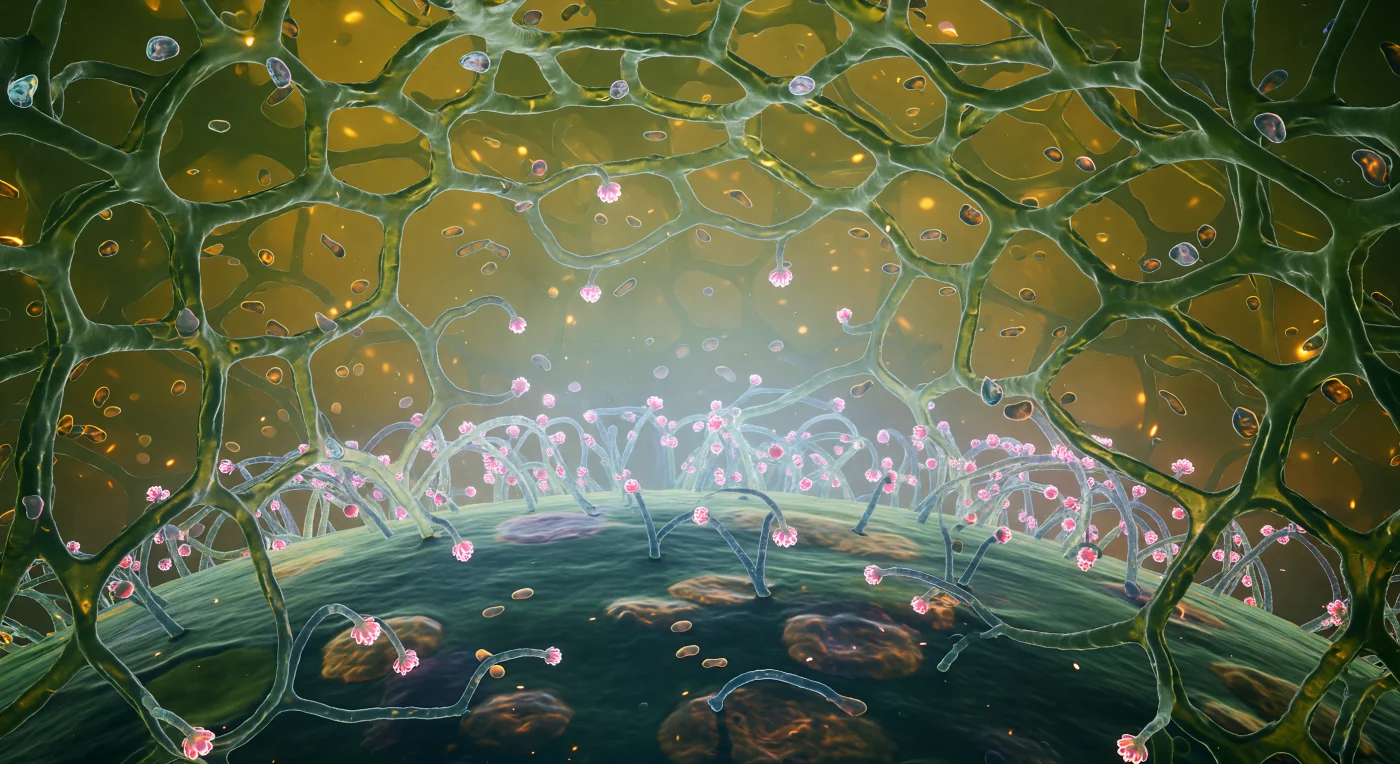
You drift through a suffocating tangle of mucin polymer chains, each strand looping and braiding into an irregular three-dimensional mesh that closes in from every direction, its pores ranging from wide amber corridors to constrictions so tight that violent, unpredictable Brownian kicks from surrounding water molecules slam you sideways against sticky polymer surfaces — contacts that bloom briefly in transient adhesive warmth before thermal energy tears them loose. This is the airway mucus layer, a viscoelastic hydrogel secreted primarily by goblet cells and submucosal glands, composed of heavily O-glycosylated MUC5AC and MUC5B mucins whose polymer backbones form a mesh with pore sizes between 100 and 500 nanometers, a physical sieve that the immune system exploits to trap and clear inhaled particles before they ever reach epithelial surfaces. The fluid itself carries dissolved proteins, ions, and shed glycan fragments that drift past like luminous debris, while at this scale inertia is meaningless — the Reynolds number is vanishingly small, so every displacement is purely diffusion-driven, a ceaseless random walk governed by thermal noise rather than any directed motion. Thirty to forty body-lengths ahead, the tangled jungle gives way to something architecturally alien: the epithelial cell surface rises like a curved planetary wall, and from it erupts the glycocalyx, a dense forest of glycan filaments tipped with sialic acid residues that sway and flash with thermal motion, their clustered negative charges forming both the primary receptor landscape for viral attachment proteins and a last defensive barrier of electrostatic and steric repulsion. The entire traverse — from open mucus to glycocalyx contact — may take seconds or hours depending on local mesh density, and many particles never complete it at all.
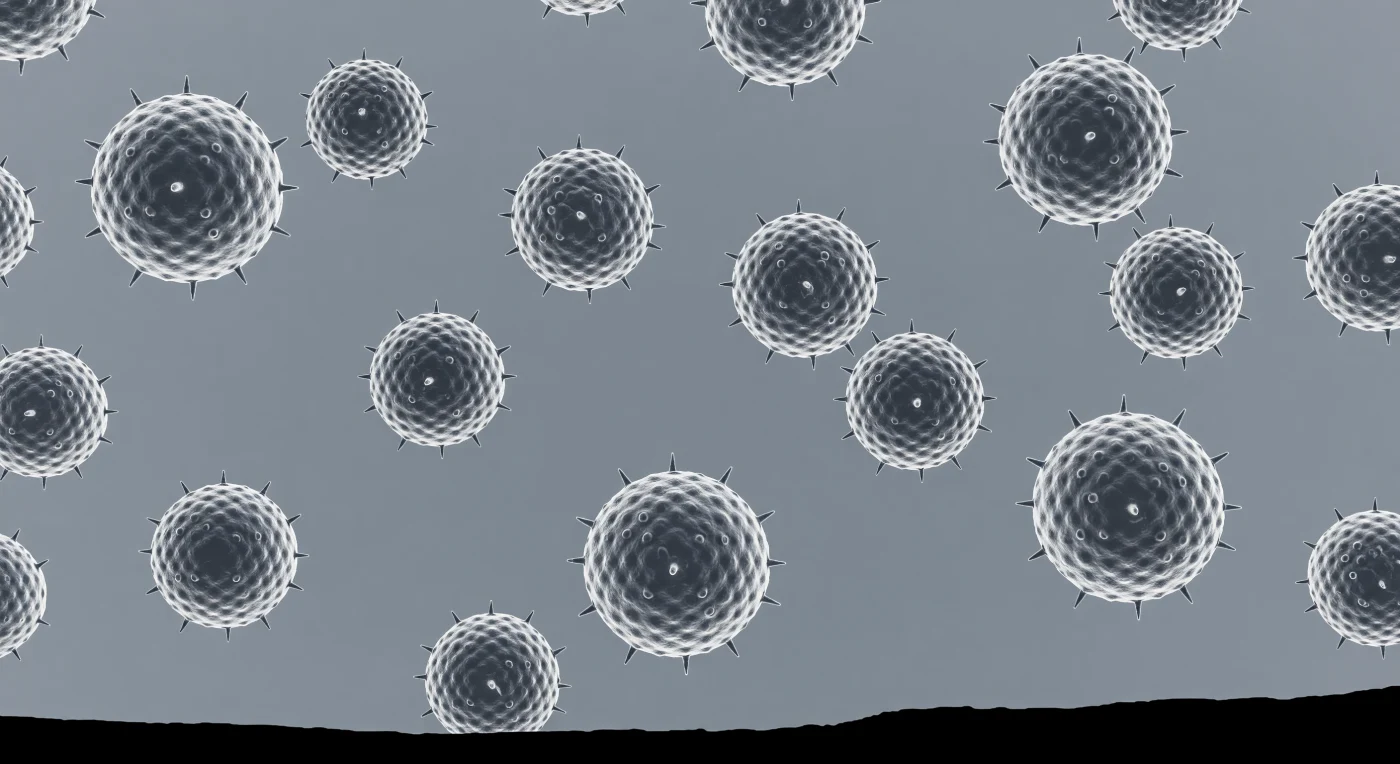
You are suspended in a medium that is not quite solid and not quite nothing — vitrified water, shock-frozen in milliseconds, arresting every molecule mid-motion into a glass that transmits electrons as faithfully as it once transmitted light. Scattered across this featureless grey-silver expanse, icosahedral virions sit embedded in the ice like sunken cathedrals, their capsid surfaces resolved with hallucinatory precision: pentameric and hexameric capsomers arranged in geodesic arrays across each faceted hull, every raised knob four to eight nanometers in relief, the geometry of self-assembly laid bare without shadow or chromatic distortion, rendered purely in the language of electron density — deep charcoal where protein mass is thickest, pale bone-white where the vitrified film thins toward nothingness at the carbon foil's edge. On some particles, trimeric glycoprotein spikes project outward from a faint double-dark lipid bilayer ring, each stalk individually resolved, separated from its neighbors by distances that, at your scale, feel like open country. The carbon foil at the frame's periphery simply ends the world — a sheer black escarpment dropping into absolute vacuum — while between the particles the ice stretches as a vast, sterile tundra in which every Brownian displacement, every diffusing ion, every thermal tremor has been locked permanently into place, the molecular violence of room temperature converted, in the span of milliseconds, into permanent and perfect silence.
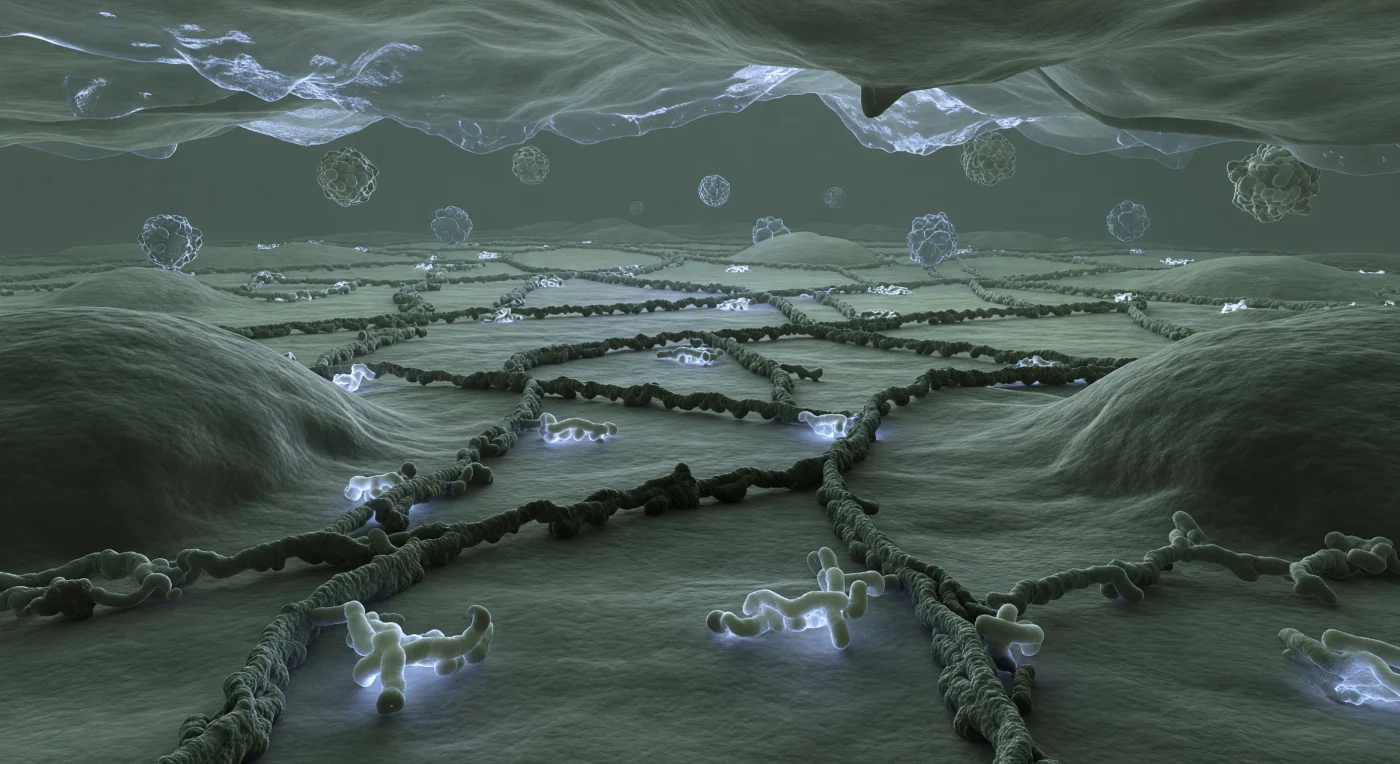
You stand on the broad, weathered expanse of a vaccinia poxvirus surface, looking out across a grey-green plateau nearly 360 nanometers wide — a vast, nearly flat continent of biological matter whose horizon curves only faintly at the edges, where the brick falls away into the surrounding cytoplasmic void. Beneath your feet, the outer lipid-protein membrane is softly wrinkled, its shallow folds catching a diffuse, sourceless bluish light — the aggregate electrochemical glow of a charged surface suspended in physiological medium, where Debye layers just a nanometer thick concentrate ions into luminous pools in every hollow. Ahead and behind, parallel ridges of surface tubules rise to roughly waist height, running in loosely aligned rows across the landscape like compressed ropes of oxidized pewter, their surfaces matte and granular, bulging and bifurcating unpredictably — the signature of a virion architecture that obeys no icosahedral symmetry, no repeating geodesic logic, only the raw, asymmetric complexity that makes poxviruses among the most structurally anomalous particles in virology. To either side, the terrain drops into the lateral body regions, broad lobes of amorphous protein material pressing outward against the membrane like buried forms under canvas, casting wide teal-grey shadows in the diffuse thermal ambience of a medium held at 37°C — a world where Brownian bombardment from surrounding water molecules delivers constant, violent kicks, and every surface contact is a potential biochemical event.
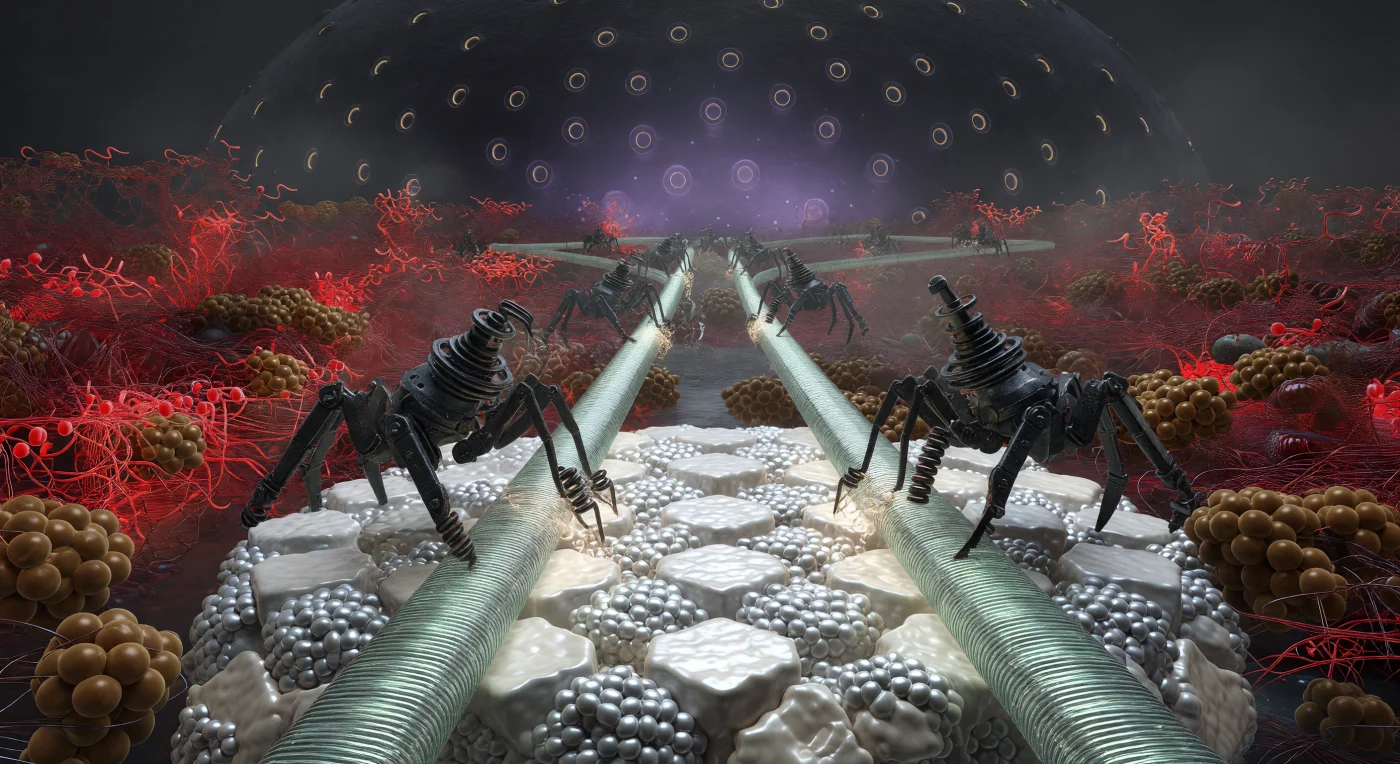
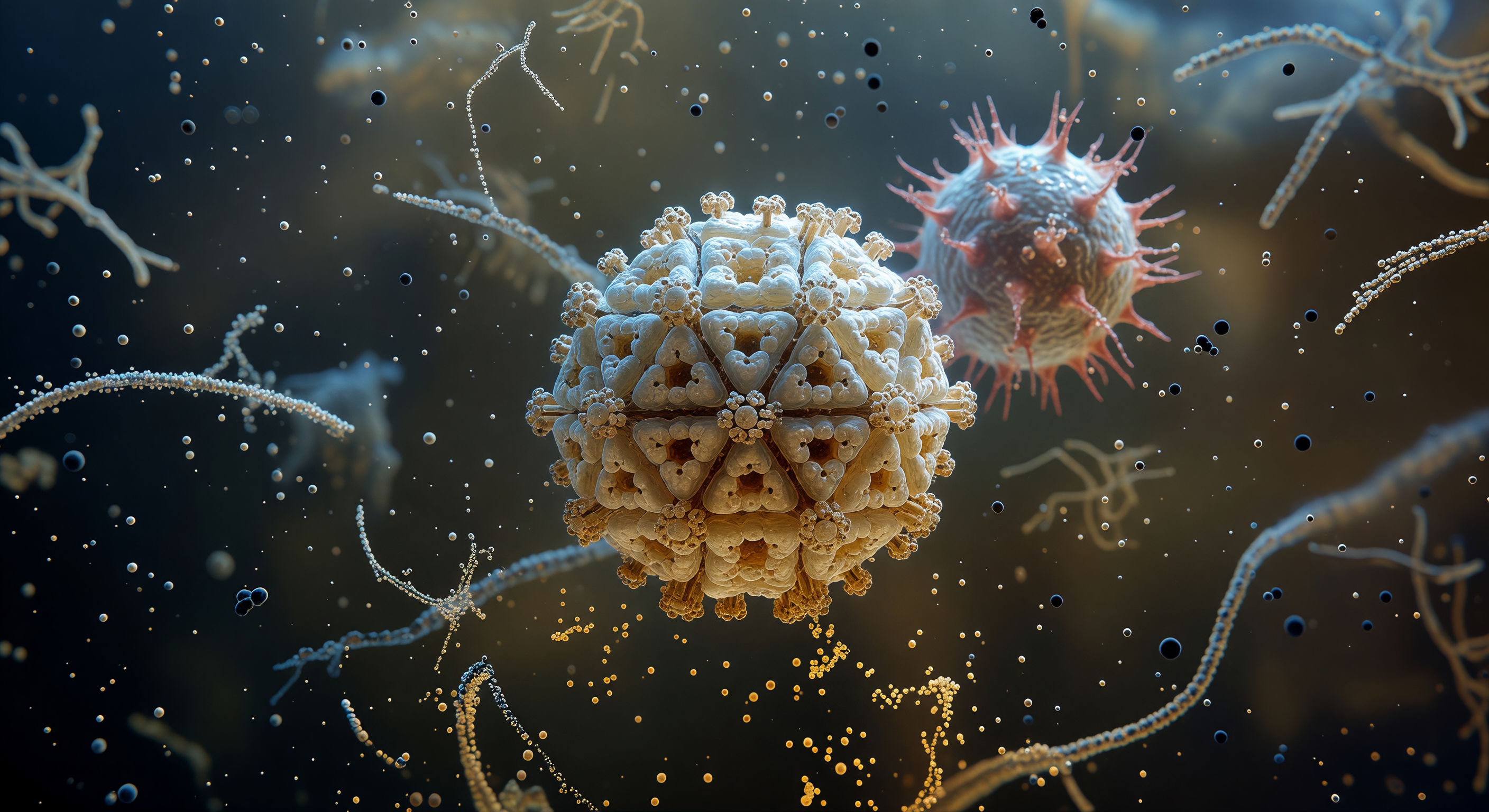
You are perched atop a vast icosahedral fortress hurtling through the interior of a living cell, gripping the faceted surface of an adenovirus capsid whose raised capsomers spread beneath you like cobblestones of pale ivory and cold platinum, each protein subunit a rounded knuckle of dense molecular matter whose hexagonal geometry reflects the strict thermodynamic logic of T=13 triangulation. Directly below, two parallel rails of microtubule track glow silver-green with cold phosphorescence, their surfaces corrugated into 4 nm protofilament ridges of tubulin dimer pairs — structures so regular they feel architectural, like suspension bridge cables glimpsed from an insect clinging to their surface — while dynein motor complexes grip the underside of your vessel in asymmetric frozen strides, their 15 nm iron-grey ring-and-stalk assemblies caught between power stroke and recovery, each mechanical cycle consuming a single ATP molecule to advance the entire capsid cargo toward the nuclear envelope visible as a vast dark planetary wall across the far visual field, its surface dimpled with the sealed irises of nuclear pore complexes through which this virus will ultimately inject its genome. The surrounding cytoplasm is a world of crushing density: tarnished-bronze ribosomes 25 nm across press in from every direction, clustered in polysomes along invisible mRNA threads, while arterial-red actin filaments weave between them in branching double-helical strands, the entire scene bathed in a sourceless anisotropic bioluminescence that reveals not emptiness but the staggering molecular crowding — 20 to 40 percent of cytoplasmic volume occupied — through which this ancient molecular parasite navigates with ruthless geometric precision.